
How I’ve helped expand access to care for sickle cell patients like me
Written by |
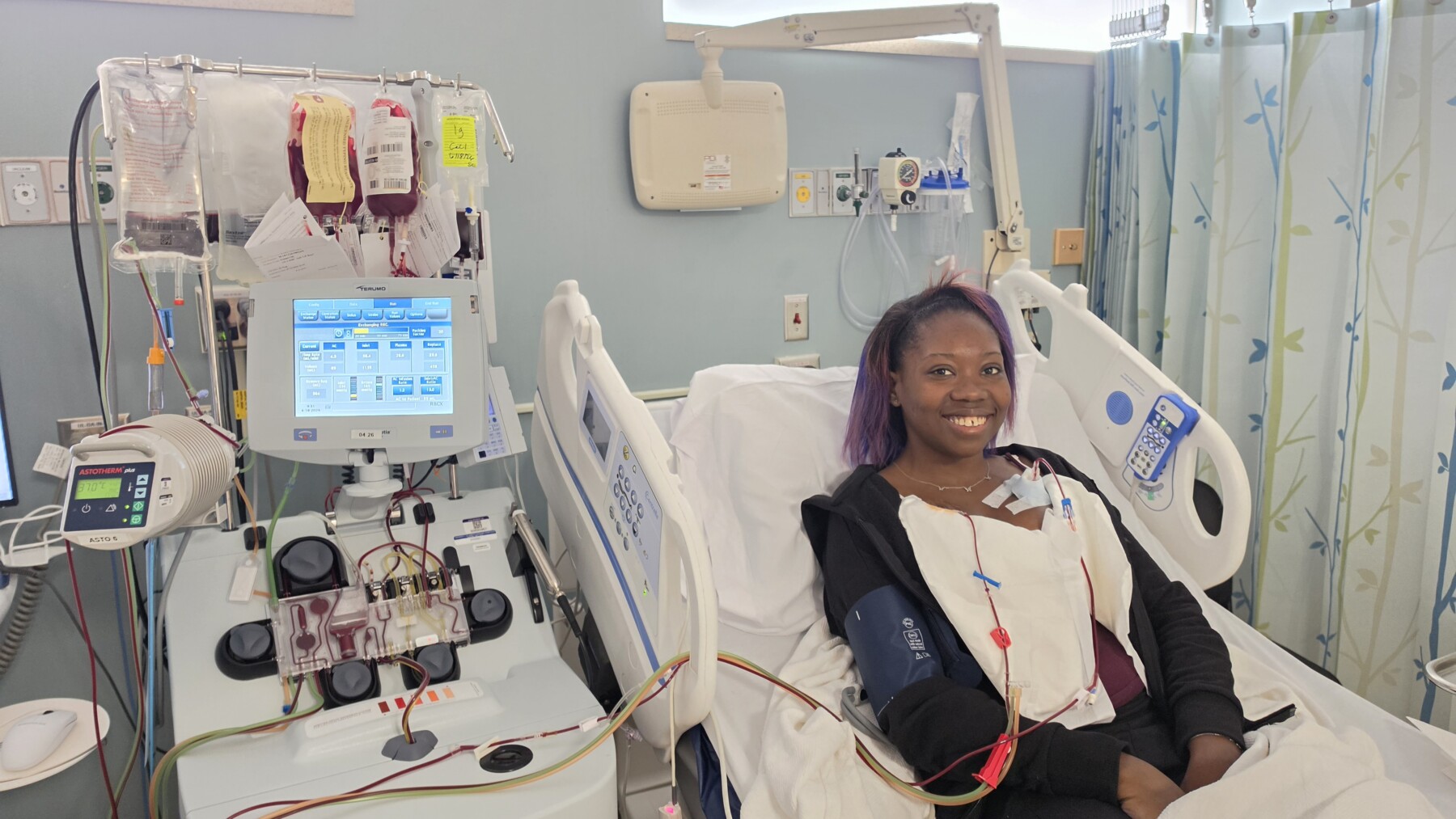
Adoncia Jackson receives a blood exchange transfusion to help manage HbSS, or sickle cell anemia — the most common form of sickle cell disease. (Courtesy of Adoncia Jackson)
In recognition of Sickle Cell Disease Awareness Month in September, the Sickle Cell Disease Awareness Month campaign features a series of stories highlighting the real-life experiences of people affected by sickle cell disease, written in their own words. Follow us on Facebook, Instagram, or X for more stories like this, using the hashtag #SickleCellDiseaseAwarenessMonth, or read the full series.
On Jan. 4, 2020, I packed up my things and moved from Atlanta to Wilmington, North Carolina. An important step in settling into a new city was to find new doctors to treat my sickle cell disease. In Atlanta, this was easy, but I didn’t have the same resources or access to specialists once I moved. However, I did find a primary care physician who was eager to learn about sickle cell and pointed me in the right direction — two and a half hours away in Chapel Hill, North Carolina.
I made my first trip to Chapel Hill later in 2020 and quickly realized I would be spending a lot of time there. I manage my sickle cell disease with monthly blood transfusions. This is a procedure in which units of blood are removed from the body and donor blood is infused to help protect my organs. Although exchanges are possible in Wilmington, no doctors were willing to supervise the procedure.
For the past six years, I’ve driven up to Chapel Hill at least once a month. The travel is necessary to receive the best possible care. I have to stay overnight at the SECU Family House because I need labs completed at the hospital two days before my exchange. I also see my doctors while I’m there. I’ve learned so much about how sickle cell affects my organs and the vigilance required to reduce the frequency of vaso-occlusive crises.
Once my team of doctors learned about my situation, they began working to connect with the local hospital system in Wilmington. In fall 2022, they were able to access clinic space in Wilmington for half a day every other month to teach resident doctors and see patients.
This was a small step toward getting sickle cell patients in this area the care they need. Advocating for myself and others in my community is a crucial part of living with this disease. It feels good knowing that I was the catalyst for making my hometown better equipped to provide care for sickle cell patients like me.
