
Vaso-occlusive crisis
 Fact-checked by
 A vaso-occlusive crisis (VOC), a hallmark of sickle cell disease (SCD), is an episode of intense pain related to blood vessel blockage and a lack of oxygen supply.
In SCD, genetic mutations lead to the production of abnormal forms of hemoglobin, a protein that helps red blood cells carry oxygen throughout the body. Red blood cells containing abnormal versions of hemoglobin can take on a crescent or sickle shape. These cells are less flexible and more likely to stick to each other and to blood vessel walls, blocking blood vessels and limiting blood flow.
VOCs, sometimes called sickle cell pain crises, happen when blood vessel blockage restricts blood flow and deprives an area of oxygen, damaging tissues and causing pain. How often these episodes occur, how severe the pain is, and how long symptoms last may vary between individuals.
Sickle cell therapies can reduce the frequency and severity of VOCs. In addition, patients can develop a personalized pain plan to guide treatment during emergencies.
What causes a vaso-occlusive crisis
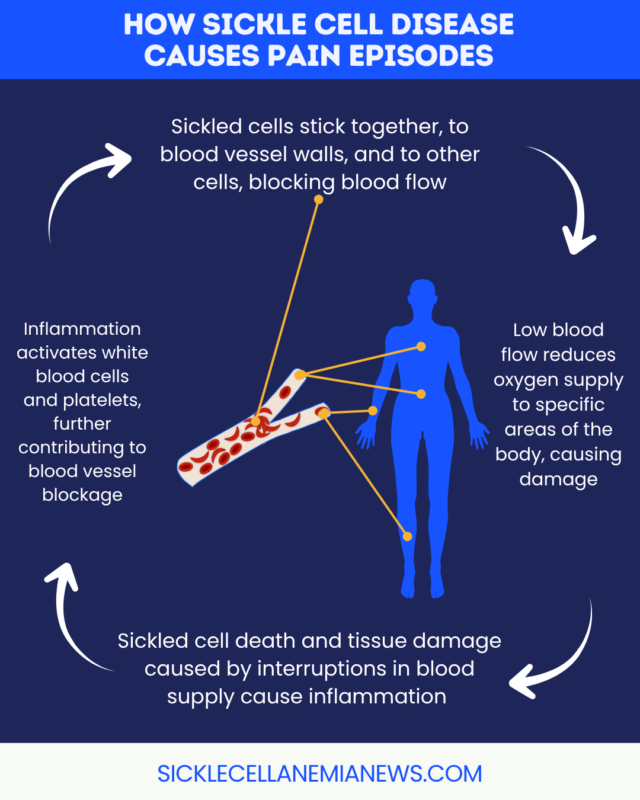
Sickle-shaped red blood cells in people with SCD are more likely to get trapped inside small blood vessels and die prematurely. When sickled cells die, they release substances that cause inflammation.
This inflammatory process can activate white blood cells and platelets (blood clot-promoting cell fragments), which may stick to blood vessel walls and sickled red blood cells, further contributing to blood vessel blockage. Interruptions in blood flow and oxygen supply caused by blood vessel obstruction damage tissues and trigger inflammation. Altogether, this creates a vicious cycle in which inflammation and blood vessel blockage continuously fuel each other, driving VOCs in people with SCD.
What a vaso-occlusive crisis feels like
Sickle cell pain may feel different for each person and in each vaso-occlusive episode. It can also change during the course of a VOC.
VOC pain occurs in the parts of the body that are not receiving enough oxygen due to blocked blood flow. It may be restricted to a single region or affect multiple parts of the body at the same time. Commonly affected areas include:
- chest
- abdomen
- legs or feet
- arms or hands
- lower back
The pain itself can be dull or sharp, and cause a stabbing, throbbing, burning, grinding, or hammering sensation. It can last anywhere from a few hours to weeks.
Common signs and symptoms
Pain is often the most prominent feature of a VOC, but other accompanying symptoms can include:
- swelling
- fatigue
- weakness
- fever
VOC symptoms likely reflect the body’s inflammatory response to oxygen deprivation and tissue damage. Pain can also put stress on the body, worsening symptoms.
Common triggers
Determining what causes a VOC is often difficult, and there isn’t always a clear inciting event. However, some people may notice that certain conditions, events, or activities can trigger VOCs, such as:
- dehydration
- high altitudes
- infections
- pregnancy
- strenuous exercise
- stress
- extreme temperatures, or sudden changes in temperature
Keeping track of potential triggers can help people avoid them when possible.
How vaso-occlusive crises are treated
The primary goals of VOC treatment are to ease pain and prevent long-term complications. In some cases, particularly if symptoms are relatively mild, people with SCD and their caregivers can manage sickle cell pain crises at home. In cases that prove difficult to control, more intensive treatment may be needed.
Home care
At-home treatment for VOCs can include:
- using over-the-counter pain medications, such as acetaminophen and ibuprofen, to ease symptoms
- drinking plenty of fluids to maintain hydration
- applying heat to the affected area
- using relaxation techniques
- finding distractions from the pain
Hospital care
For more severe VOCs, treatment in a hospital setting may include:
- into-the-vein (intravenous) delivery of fluids to maintain hydration
- stronger pain medications, including intravenous opioids
- oxygen therapy to help prevent low blood oxygen levels
Developing a personal pain plan
People with SCD should also work with their caregivers and healthcare providers to develop a personalized plan for how to deal with acute pain. This can help make sure that the patient’s treatment preferences are recognized in emergency settings, even if they have difficulty communicating during an active pain crisis.
When to seek urgent medical care
Knowing when to go to the hospital for sickle cell pain can be challenging, and doctors can provide individualized guidance about red flag symptoms. In general, if pain becomes too difficult to manage effectively at home, emergency treatment may be necessary.
VOC symptoms that may need urgent attention can include:
- severe, unmanageable pain
- pain that suddenly intensifies and doesn’t ease with medication
- fever
Specialist sickle cell centers are often best equipped to treat VOCs and complications. In other healthcare settings, patients and caregivers may need to advocate for effective pain treatment. A personalized pain plan can help guide these conversations.
Preventing future vaso-occlusive crises
Several approved medications and other interventions, such as blood transfusions, can help prevent pain crises and reduce the risk of other sickle cell complications. Other daily adjustments may also help some people living with SCD reduce the frequency and severity of VOCs. These include:
- avoiding known VOC triggers
- staying hydrated
- promptly treating infections
- taking medications consistently as prescribed, and attending scheduled appointments
If VOCs are frequent and the pain is severe, doctors may recommend adjusting treatment strategies.
Sickle Cell Disease News is strictly a news and information website about the disease. It does not provide medical advice, diagnosis, or treatment. This content is not intended to be a substitute for professional medical advice, diagnosis, or treatment. Always seek the advice of your physician or other qualified health provider with any questions you may have regarding a medical condition. Never disregard professional medical advice or delay in seeking it because of something you have read on this website.