Sickle cell disease treatment
 Fact-checked by
 Sickle cell disease (SCD) treatment may involve routine therapies and emergency care to help ease symptoms and prevent complications of the inherited blood disorder.
In sickle cell, genetic mutations affect hemoglobin, a protein that helps red blood cells carry oxygen throughout the body. Red blood cells containing this abnormal hemoglobin can take on a crescent, or sickle-like, shape and tend to stick together, disrupting circulation and reducing oxygen delivery to body tissues. This can lead to painful crises and other sickle cell symptoms.
Treating SCD is a highly individualized process. Communication between patients, caregivers, and healthcare providers can help guide the decision-making process around sickle cell treatment options.
Goals of sickle cell disease treatment
The main goals of SCD treatment include:
- managing symptoms, including pain
- reducing the frequency and severity of vaso-occlusive crises (VOCs), painful episodes that are a hallmark of sickle cell
- preventing and treating complications
- increasing life expectancy and improving quality of life
For some people, gene therapies or stem cell transplants can be curative. However, these treatments come with challenges and risks and aren’t recommended in every case.
Medications
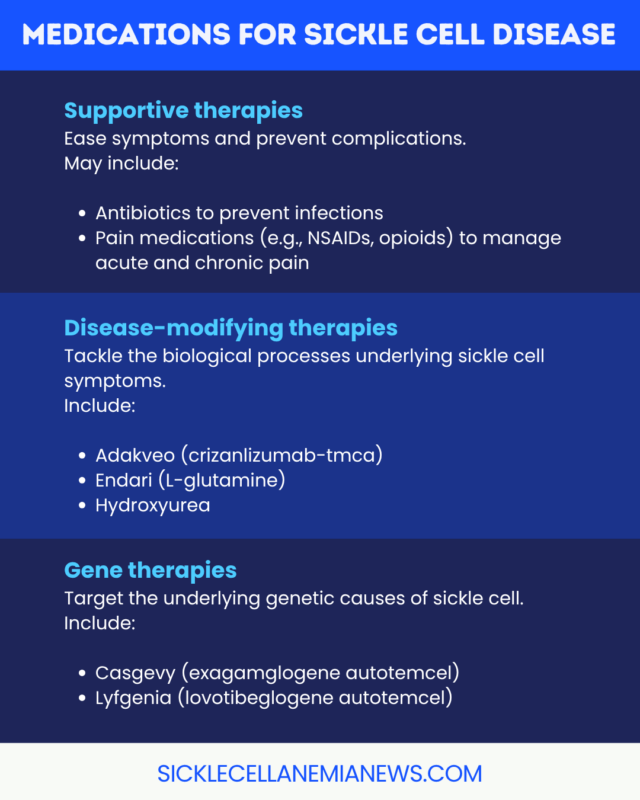
Medications for SCD typically fall into three broad categories:
- Supportive therapies: address specific symptoms or risks, but not their underlying causes
- Disease-modifying therapies: tackle the biological processes underlying SCD symptoms
- Gene therapies: target the underlying genetic causes of sickle cell
Depending on the situation, doctors may recommend different treatment combinations to manage the condition.
Supportive therapies
Supportive therapies can ease symptoms and reduce the risks of specific complications. Examples include:
- antibiotics to prevent infections
- pain medications to manage acute and chronic pain
Mainstays of pain management for SCD include nonsteroidal anti-inflammatory drugs, or NSAIDs, such as ibuprofen and aspirin, and opioids.
Disease-modifying therapies
Disease-modifying therapies alter the biological processes at play in SCD to ease symptoms, reduce the risk of VOCs, and prevent sickle cell complications.
In the U.S., there are three approved disease-modifying therapies for sickle cell:
- Adakveo (crizanlizumab-tmca): reduces the likelihood of sickled cells and other blood cells getting stuck to the walls of blood vessels and blocking blood flow
- Endari (L-glutamine): reduces damage related to oxidative stress, a form of cellular damage, in red blood cells
- Hydroxyurea: increases the production of fetal hemoglobin, an alternative version of the protein mainly produced during fetal development, to reduce red blood cell sickling
Gene therapies
While disease-modifying therapies target the processes that cause SCD symptoms, gene therapies target the root causes of the disease itself — the mutations in the HBB gene that cause the body to produce abnormal hemoglobin. Gene therapies can boost the production of functional versions of the protein, making them a potential cure for SCD, although long-term outcomes are still being studied.
U.S. regulators have approved two one-time gene therapies for people with SCD:
- Casgevy (exagamglogene autotemcel): edits DNA in the patient’s own cells to increase the production of fetal hemoglobin and reduce red blood cell sickling
- Lyfgenia (lovotibeglogene autotemcel): provides cells with a working version of the HBB gene, which produces a form of hemoglobin with anti-sickling properties
Transfusions
Blood transfusions for SCD can supplement medications and help manage the disease in certain emergency situations. They involve delivering healthy red blood cells from donors to a patient’s bloodstream, reducing the effects sickled cells have in the body.
Blood transfusions can help manage emergency complications of sickle cell, including:
- Severe anemia: dangerously low red blood cell counts, which can cause problems with oxygen delivery to tissues
- Acute chest syndrome: a respiratory condition that can develop when sickled cells disrupt blood flow in the lungs
- Stroke: another SCD complication that can happen when sickled cells block blood flow to the brain, depriving it of oxygen
For some people, routine blood transfusions may be part of their treatment plan to reduce the risk of VOCs and other complications, including stroke.
However, they come with several risks, including allergic reactions, fever, and severe immune attacks against the transfused cells. Close monitoring during and after a blood transfusion can help identify and treat these complications.
Stem cell transplant
Typically, a stem cell transplant provides a person with SCD with hematopoietic stem cells — the precursors of many types of blood cells, including red blood cells — collected from a healthy donor. If the transplant is successful, these stem cells will be incorporated into the body and begin producing healthy blood cells.
While this is a potential cure for SCD, the intensive preparation for transplant and the chance of donor cells attacking the recipient’s body mean the procedure can be high-risk. Doctors may suggest it as an option if symptoms are severe and other SCD therapies haven’t been successful.
Managing and preventing pain crises
During a VOC, blood vessel blockage and inflammation lead to intense pain in parts of the body that aren’t receiving enough oxygen. To help prevent pain crises, people with SCD should:
- take disease-modifying therapies as prescribed
- stay hydrated
- take note of and, when possible, avoid potential triggers of VOCs
Once a VOC is underway, it is difficult to change its course, so therapies focus on managing pain. At-home sickle cell pain treatment may include over-the-counter medications such as NSAIDs, heat therapy, relaxation techniques, and distraction.
If pain becomes unmanageable, hospitals may provide more intensive VOC treatment, including intravenous delivery of fluids to maintain hydration and stronger pain medications, such as opioids.
In general, it is a good idea to seek emergency care for a VOC if a patient experiences:
- severe, unmanageable pain
- pain that suddenly becomes worse
- fever
Treatment considerations for children vs. adults
SCD management strategies and treatment needs may change throughout life.
Sickle cell treatment for children, particularly very young children, often focuses on preventing infections with daily preventive antibiotics and monitoring stroke risk. As children get older, the focus may shift away from stroke, which is primarily a risk for younger children, and head toward other possible complications, although stroke monitoring remains important.
There is a broader range of approved sickle cell treatments for adults and adolescents than for younger children, and these treatments can be tailored to individual needs. Appropriate planning can help people with sickle cell transition smoothly from pediatric to adult care while avoiding a gap in treatment.
Treatment team and ongoing care
A sickle cell care team may involve specialists to help with tailored medical, psychological, social, and educational support. Blood specialists, or hematologists, can help develop a plan for long-term SCD treatment. Primary care providers also play important roles in coordinating care and assessing the risks of potential complications.
People living with SCD and their caregivers may sometimes need to advocate for care or help coordinate it across providers. The Sickle Cell Association and other organizations offer support services to help navigate these challenges.
Sickle Cell Disease News is strictly a news and information website about the disease. It does not provide medical advice, diagnosis, or treatment. This content is not intended to be a substitute for professional medical advice, diagnosis, or treatment. Always seek the advice of your physician or other qualified health provider with any questions you may have regarding a medical condition. Never disregard professional medical advice or delay in seeking it because of something you have read on this website.