
Sickle cell disease overview
 Fact-checked by
 Sickle cell disease (SCD) is a genetic condition that affects red blood cells and causes problems with blood flow and oxygen delivery to body tissues.
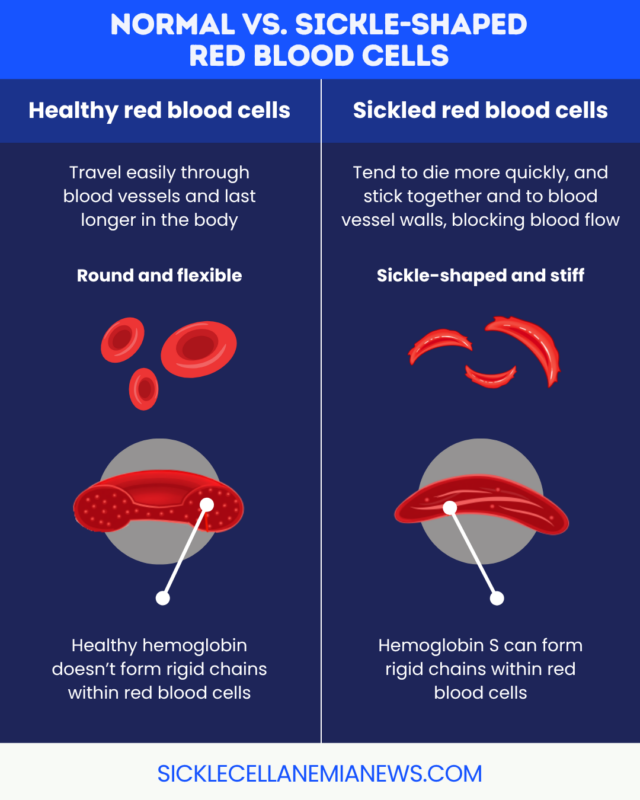
People with sickle cell produce abnormal versions of hemoglobin, the protein that helps red blood cells carry oxygen throughout the body. Abnormal hemoglobin can cause red blood cells to sickle, turning from their usual oval shape to a crescent-like shape. These sickled cells tend to die more quickly than healthy red blood cells. They also have a tendency to stick together and to blood vessel walls, blocking circulation and leading to a wide array of symptoms and complications.
An estimated 7.74 million people globally and about 100,000 people in the U.S. have SCD. In the U.S., it affects primarily Black and African American individuals.
Causes
The causes of SCD are related to mutations in the HBB gene, which mainly lead to the production of an abnormal version of hemoglobin called hemoglobin S (HbS). When oxygen levels are low, HbS molecules can stick together and form rigid chains within red blood cells, deforming them and causing sickling. Some people with sickle cell also produce other abnormal hemoglobin variants.
Everyone inherits two copies of HBB — one from each biological parent — and SCD develops only if both copies contain mutations. People with one working HBB copy and one mutated copy don’t typically have symptoms, but can still pass the mutation to their biological children. These people have what is known as sickle cell trait, or SCT.
Types
Each type of SCD is related to different genetic variants in the HBB gene. People with SCD have at least one mutated gene copy that encodes HbS. The other gene copy may also produce HbS, or another abnormal hemoglobin variant.
Common sickle cell types include:
- HbSS: Both HBB copies produce HbS. It is the most common and typically the more severe form of SCD, also known as sickle cell anemia.
- HbSC: Mutations lead to the production of HbS plus another abnormal protein variant called hemoglobin C. This is typically a milder form of SCD.
- HbS/beta-thalassemia: Caused by one mutation encoding HbS and another mutation associated with beta thalassemia, which is another inherited blood disorder that affects hemoglobin production. This specific form of the disease may be milder or more severe, depending on whether the mutation causing beta thalassemia is reducing hemoglobin production or stopping it entirely.
Symptoms and complications
Possible SCD symptoms and complications can include:
- anemia, or a low number of healthy red blood cells and/or low hemoglobin levels, which can cause fatigue, paleness, dizziness, and shortness of breath
- vaso-occlusive crises, also called sickle cell pain crises, which are sudden episodes of severe pain related to blood vessel blockage and a lack of oxygen supply to certain parts of the body
- swelling of the hands or feet (dactylitis)
- recurrent infections, particularly bacterial infections
- delayed growth or development, including delayed puberty
- vision problems, including blind spots, floaters, and blurred vision
- acute chest syndrome, a severe respiratory condition that can be caused by poor blood flow in the lungs, or occur as a result of an infection
- stroke, which can occur when blood flow and oxygen supply to the brain is compromised
- bone tissue death (avascular necrosis) due to a lack of oxygen supply
- leg ulcers due to poor circulation
- painful, sustained erections (priapism)
- problems with breathing during sleep (sleep apnea)
Appropriate treatment and regular monitoring can help reduce the risk of these SCD complications.
Diagnosis
SCD diagnosis may require a series of blood tests. These may include:
- hemoglobin electrophoresis and/or hemoglobin high-performance liquid chromatography: These tests identify and measure the relative proportion of HbS and other hemoglobin variants in the blood.
- genetic testing: This test confirms the presence of HBB mutations.
These tests can also help identify SCT.
Many countries, including the U.S., have widespread newborn screening systems, enabling diagnosis soon after birth. Doctors can also diagnose sickle cell before birth by genetically analyzing samples from the placenta or the amniotic fluid that surrounds a developing fetus.
Despite these advances in early identification, diagnosis of SCD in adults still occurs, particularly for people born in times or places without robust newborn screening.
Treatment
SCD treatment typically aims to manage symptoms and reduce the frequency and severity of pain crises. Therapies can also help lower the risk of complications, improve quality of life, and increase life expectancy.
Common treatment approaches may include:
- supportive therapies, which address specific symptoms or risks without directly tackling their underlying cause. Examples include pain relievers, such as nonsteroidal anti-inflammatory drugs and opioids, and antibiotics to prevent infections.
- disease-modifying therapies, which target the biological processes underlying SCD symptoms. Approved disease-modifying therapies for sickle cell include Adakveo (crizanlizumab-tmca), Endari (L-glutamine), and hydroxyurea.
- gene therapies, which tackle the underlying genetic causes of SCD, enabling the production of functional versions of hemoglobin. Approved one-time gene therapies for SCD include Casgevy (exagamglogene autotemcel) and Lyfgenia (lovotibeglogene autotemcel).
- blood transfusions, which provide patients with healthy red blood cells from donors. These can help manage certain emergency situations, such as severe anemia or acute chest syndrome, or doctors can give them routinely to reduce the risk of stroke or other complications.
- stem cell transplant, which replaces a patient’s blood stem cells with healthy ones from a donor, allowing the production of healthy red blood cells. While a stem cell transplant may be curative for some people, the procedure comes with several risks and is not recommended for everyone.
Daily management
Managing SCD on a day-to-day basis often involves lifestyle considerations and adhering to prescribed treatment plans. Common tips for daily management include:
- staying up to date with vaccinations to decrease infection risk
- decreasing stress levels
- getting enough sleep
- getting safe and appropriate exercise
- eating a healthy diet
- avoiding smoking or vaping
- staying hydrated
- identifying and avoiding situations that could trigger a vaso-occlusive crisis
Patients may want to discuss early warning signs of complications with their care team and form a plan for emergency situations. Tracking symptoms with a daily diary can help doctors identify patterns and determine if treatments are effective.
Living with sickle cell disease
SCD symptoms can be disruptive and affect a patient’s ability to participate in everyday activities. However, appropriate sickle cell treatment can support better quality of life. Pacing activities can also help people with the condition avoid fatigue.
SCD in children can affect their time at school. Caregivers may want to discuss SCD basics with teachers to ensure children receive the support they need.
Self-advocacy for adaptations may also make work and school easier for some people with sickle cell. Several organizations, including the Sickle Cell Association, offer resources to help patients and caregivers navigate these conversations.
These groups may also provide support for mental healthcare, including support groups for newly diagnosed SCD patients. A strong support network, including a multidisciplinary healthcare team, can help with emotional well-being for patients and those close to them.
Sickle Cell Disease News is strictly a news and information website about the disease. It does not provide medical advice, diagnosis, or treatment. This content is not intended to be a substitute for professional medical advice, diagnosis, or treatment. Always seek the advice of your physician or other qualified health provider with any questions you may have regarding a medical condition. Never disregard professional medical advice or delay in seeking it because of something you have read on this website.