
Raising a child with sickle cell means showing up with purpose
Written by |
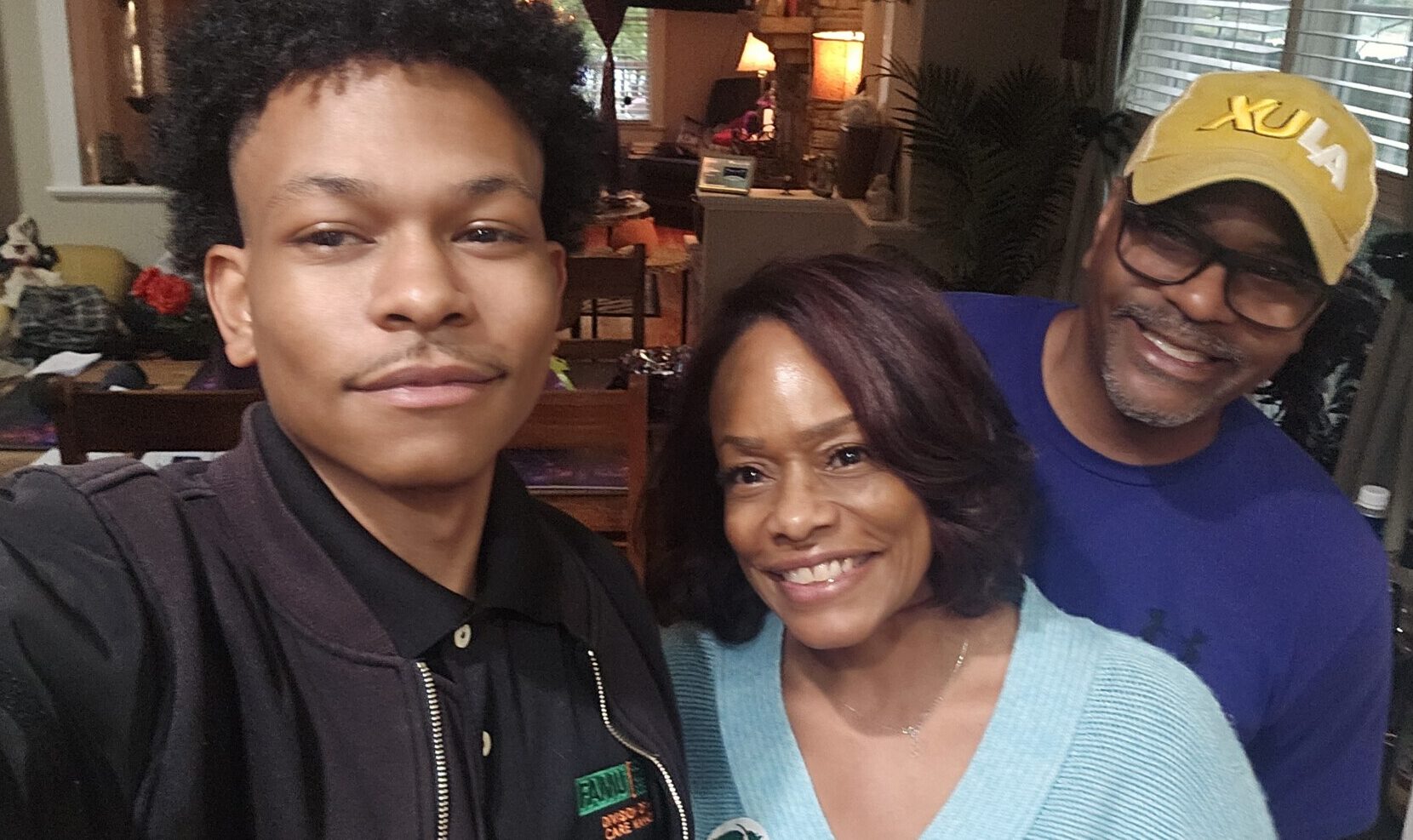
Keli Jones, center, takes a selfie with her son Xavier, left, and husband Barry, right. (Photos courtesy of Keli Jones)
In recognition of Sickle Cell Disease Awareness Month in September, the Sickle Cell Disease Awareness Month campaign features a series of stories highlighting the real-life experiences of people affected by sickle cell disease, written in their own words. Follow us on Facebook, Instagram, or X for more stories like this, using the hashtag #SickleCellDiseaseAwarenessMonth, or read the full series.
The day I found out my son had sickle cell disease (SCD) started with a letter from the hospital: Xavier Allen Jones has SS sickle cell disease. Please call to schedule an appointment.
Xavier was born with sickle beta thalassemia (HbS/beta-thal), a form of SCD caused by inheriting one sickle cell gene from me and one beta thalassemia gene from his father. While SS and SC are more common, each type varies in severity. All demand urgent care, understanding, and strong advocacy.
I didn’t know I carried the trait until my oldest daughter was born — and my husband was unaware of his status, too. Genetic counseling showed we both carried a gene, and that any future child had a 1 in 4 chance of having sickle cell disease.
From day one, I dove into research, learning everything I could about managing his care — not perfectly, but with purpose. We never blamed anyone, not even ourselves. And yes, I made mistakes, some born from hope, others from not knowing better, such as thinking he could push through pain or that skipping a precaution wouldn’t lead to crisis. But every misstep taught us how to fight smarter.

After her son’s diagnosis with sickle cell disease as an infant, Jones ensured he would know how to advocate for himself. (Courtesy of Keli Jones)
We made it our mission to educate our family, workplace, community, doctors, and schools — anyone who’d listen so they could walk beside us, not just witness our journey. More than anything, we wanted Xavier to feel normal, seen, and safe, even when life was anything but.
By age 5, I made sure Xavier knew his disease inside and out, his diagnosis, his baseline stats, how to describe his pain, and what he needed from doctors. I wanted him to have a voice, even in the chaos of an ER. His safety, his care, depended on it.
I’ll never forget the sound of babies crying in pain during their crises. Hearing that same cry come from my own son broke me every time. It still does.
So many of our visits became teaching moments, not just for Xavier, but for the doctors we met. Too often, ER teams didn’t fully understand sickle cell. But with this disease, time is everything: Quick action means faster relief, proper treatment, and getting to the root of the crisis before it spirals. We learned to advocate hard, speak up, and never wait.
We found ourselves in that ER again and again. I remember one triage nurse looked at our record and said, “You know, you’ve been here 68 times in the past year.”
My first thought was “Really?“ Then I said, “Yeah. That sounds about right.”
That was our reality. Not counting visits, just living through each crisis as it came. We learned to move forward not with ease, but with purpose. We didn’t know another way. We just kept showing up — for Xavier, for his care, for his life.
This journey is carved in pain, love, and relentless resilience: not just surviving, but fighting with heart, dignity, and fire in every step.
