
Transforming how others see life with sickle cell disease
Written by |
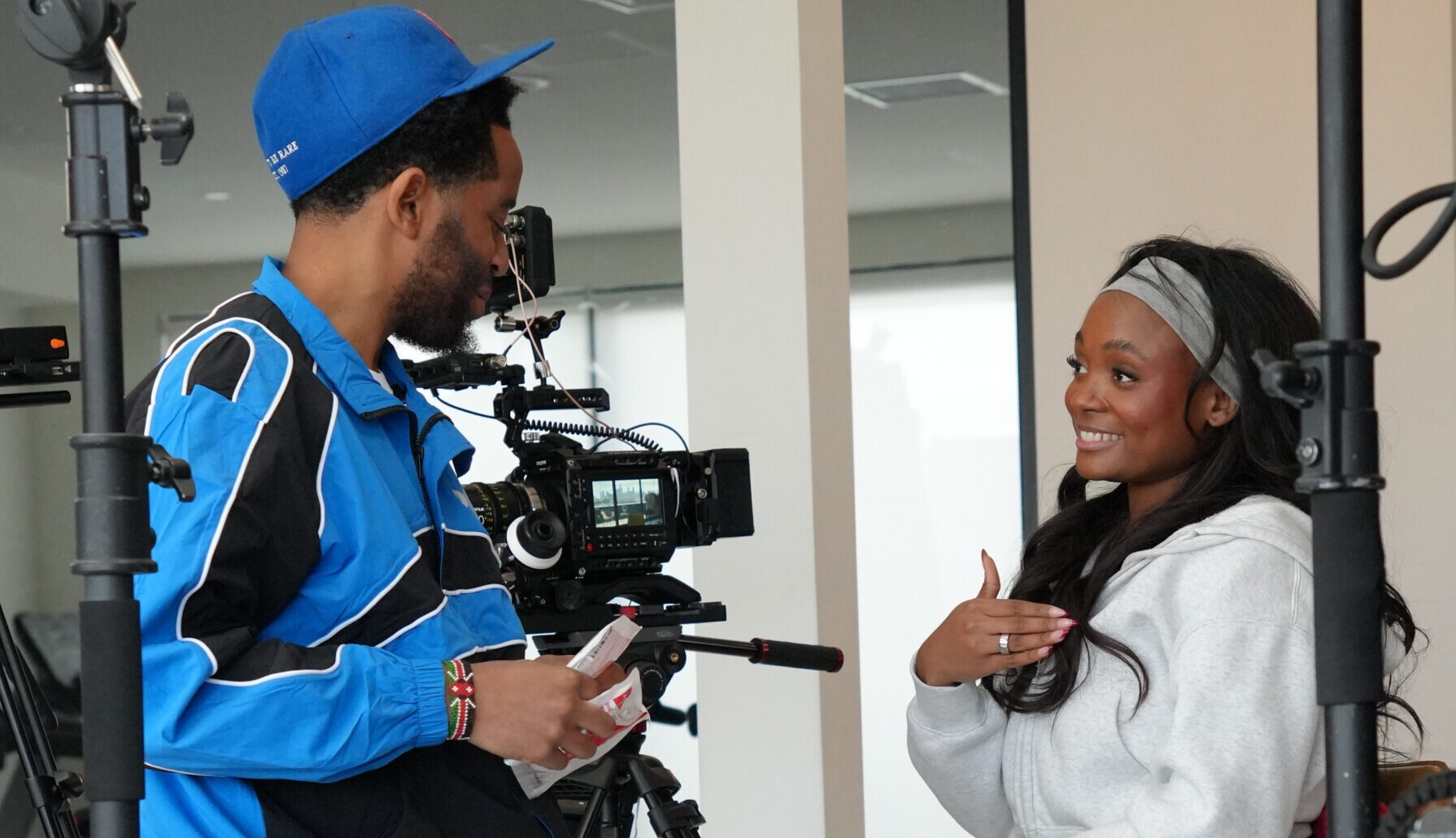
Alexandria Smith is interviewed on set during the filming of her documentary debut, "Rare: Pain Into Champagne," in Philadelphia, on May 14, 2026. (Photo by Zoe Smith)
In recognition of Sickle Cell Disease Awareness Month in September, the Sickle Cell Disease Awareness Month campaign features a series of stories highlighting the real-life experiences of people affected by sickle cell disease, written in their own words. Follow us on Facebook, Instagram, or X for more stories like this, using the hashtag #SickleCellDiseaseAwarenessMonth, or read the full series.
I was born with sickle cell disease, so as long as I’ve been alive, it’s been part of my story. But I didn’t really become conscious of what that meant until elementary school — and constant hospital stays, missed birthday parties, and sleepovers I couldn’t attend. Even among close friends, I kept my diagnosis quiet.
This was the early 2000s, before terms like “sickle cell warrior” were common. Kids were cruel, and I was terrified someone would think I had “cooties.” So I carried it alone, putting my best foot forward whenever I was out of the hospital, even as the limitations wore on me.
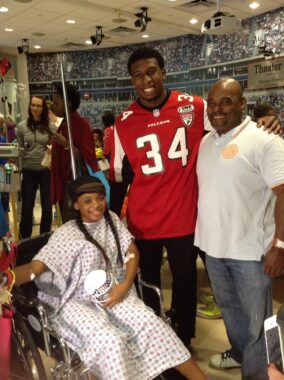
Smith meets NFL players during a visit to Children’s Healthcare of Atlanta at Scottish Rite, where she was hospitalized as a sickle cell patient during her sophomore year of high school. (Courtesy of Alexandria Smith)
One moment changed that. In fourth or fifth grade, I had my first major surgery to remove a cyst from my kidney. Around the same time, my mom was diagnosed with breast cancer. My sister rallied our school and some sponsors to decorate my hospital room with everything “Hannah Montana“: pillows, blankets, journals, hairpins, and my favorite candy, Skittles.
My classmates showed up with so much warmth that some of them said they wished they had sickle cell, too, just to get that kind of love. For the first time, my disease was met with celebration instead of stigma, and something in me softened.
Still, it took years before I was fully open about it with new people. That shift didn’t happen until my early 20s, when I nearly lost my life at 24. What almost killed me wasn’t just sickle cell complications — it was medical negligence rooted in the implicit bias and racial stereotypes so many sickle cell patients face in healthcare. That experience birthed my nonprofit, Hemoglowbin, built on the belief that storytelling — specifically film, the way I’ve always processed the world — could humanize us and shift how the medical system sees sickle cell patients.
If I could tell every young warrior one thing, it’s this: Don’t let anyone hand you a timeline for your life. Growing up, you’re told what you can’t do, and sometimes even how long you might live. Don’t let that shrink you. Learn to manage your disease, but don’t let it stop you from living.
Sickle cell disease is not your identity — you’re a human being who happens to live with it. We didn’t choose these cards, but we can still make something good from them. And with the medicine and technology emerging today — things I never thought I’d witness in my lifetime — I have more hope for the future than ever.
