
Recently, I’ve been reflecting on how living with sickle cell disease has affected many of my dreams, goals, and lifestyle choices. Despite the changes, I have continued to dream and pursue my aspirations successfully. The impact of sickle cell disease intensified for me during…
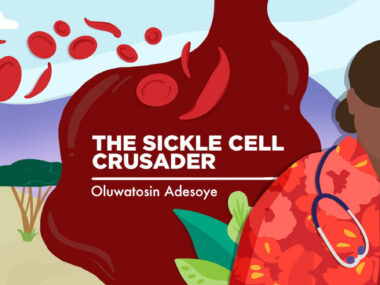
The Sickle Cell Crusader — Oluwatosin Adesoye

Adesoye Oluwatosin is a practicing physician, a passionate and award-winning sickle cell advocate, and educator. She’s the founder of Sickle Cell Celebs, an online community for people living with sickle cell disease, and of Sicklelive Foundation, an NGO that caters to people living with sickle cell disease. She’s a Nigerian diagnosed with sickle cell anemia (HBSS) in 1987 when she was just 1 year old. She enjoys using her personal and medical experience to educate and create awareness about sickle cell disease and also help reduce health inequalities in its management. She’s called “The Sickle Cell Crusader.” Her column promises to be expository, educative, and compelling.
Featured Post
I recently asked myself a simple question: What does it really mean to live well with sickle cell disease (SCD)? Can someone with a severe, lifelong condition genuinely say they are living well? After reflecting on my journey, I realized that living well has little to do with having…

A few weeks ago, I was in excruciating pain in the dead of the night. I’m not one to disturb others when I’m in pain unless it’s severe and I need help to manage it. This night was one of those exceptions, and I had to reluctantly wake up my…
Some of my childhood memories still linger. I vividly remember, for instance, the lonely nights spent in my bed while struggling with a painfully distended abdomen, a discomfort extreme enough to take away many nights of sleep. My bed was in the same room as my parents, yet I was…
Hydration plays a vital role in the management of sickle cell disease. It offers numerous benefits, including enhanced blood flow, and can help prevent or treat sickle cell crises and other disease complications. Sickle cell is a genetic disorder that alters the shape and structure of red blood cells.
Managing multiple sickle cell complications can be emotionally and physically overwhelming. Today I’d like to share an experience that still resonates deeply with me: my heartbreaking reaction to the diagnosis of one of those complications. Interestingly, it wasn’t the worst I’ve faced, but my reaction to it was undoubtedly…
With sickle cell disease, pain is often ever-present. Many people who have this disease experience various forms of pain throughout their lifetimes. Sometimes the pain is acute, other times it’s chronic, and still others it’s acute-on-chronic (when acute pain develops into chronic pain). Pain may be caused by various…
As last year drew to a close, a thought-provoking post in the Sickle Cell Celebs Facebook group inspired me to reflect on what I wish people understood about sickle cell disease. This introspection led me to come up with a long list that I’ve decided to share. There’s…
Sickle cell disease can manifest as both a visible and invisible illness, depending on the individual and their unique complications. For some, the symptoms are apparent, but for others, the disease remains largely hidden. Many sickle cell patients are prone to stigma and discrimination. When the disease is…
Blood transfusions play a critical role in the management of sickle cell disease. They can help prevent and manage various complications as well as reduce disease severity. This lifesaving intervention has brought many sickle cell patients on the verge of death back to life — including me. Despite being…
Living with sickle cell disease is not a proverbial bed of roses; instead, it’s a journey of twists and turns. Yet I’m grateful for the experience. It’s imparted invaluable life lessons that have shaped me into the woman I am today, and that woman is a better human being.
Note: This column describes the author’s own experiences with various medications, including nonsteroidal anti-inflammatory drugs and oral opioids. Not everyone will have the same response to treatment. Consult your doctor before starting or stopping any therapy. Sickle cell disease involves recurring episodes of pain, which can be acute…
As I prepare to celebrate my 38th birthday on Oct. 18, I find myself lost in thought, reflecting on the incredible journey that has brought me to this milestone. Over the years, I’ve survived with flying colors after all the complications that sickle cell disease has thrown at…
Explore More Columns
 Discussion
Discussion
Discussion
 Discussion