
Scientists discover how stressed red blood cells make hemoglobin
Study findings could lead to new treatments for sickle cell, other blood disorders
Written by |
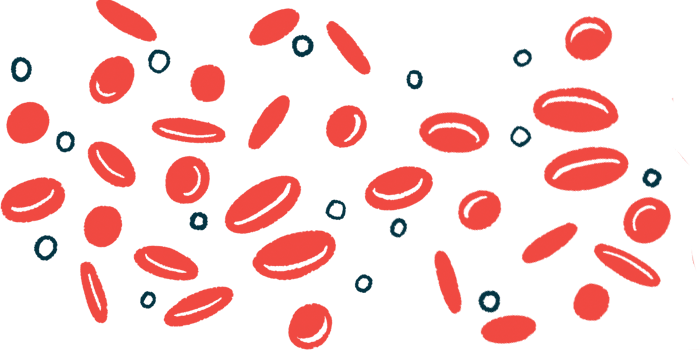
A discovery about red blood cells could have implications for sickle cell disease (SCD) and other blood disorders marked by problems with hemoglobin, the protein red blood cells use to carry oxygen through the bloodstream.
Scientists found that red blood cells growing under stressful conditions can import heme, an iron-containing molecule key for making hemoglobin, from other cells using a protein called Heme Responsive Gene 1 (HRG1).
The study, “A cell-nonautonomous heme acquisition pathway enables erythroid hemoglobinization under stress,” was published in Science.
“We found that in the absence of HRG1, the red blood cells that are produced are sub-optimal, which means that when the system is stressed and must make more red blood cells than usual, they may have a hard time doing so without HRG1,” Iqbal Hamza, PhD, the study’s senior author and a professor at the University of Maryland School of Medicine (UMSOM), said in a university news story.
The researchers also found that blocking HRG1 in a mouse model of beta-thalasemia, a blood disorder characterized by hemoglobin problems, improved red blood cell production.

‘Exciting therapeutic possibilities’ for blood disorders
The implications of these findings “extend to a wide spectrum of blood disorders—including sickle cell disease and [beta-thalassemia]—where heme imbalance drives inflammation, oxidative stress [a type of cellular damage], and organ damage,” said Mark T. Gladwin, MD, dean of UMSOM. “Identifying HRG1 as a regulator of heme availability opens exciting therapeutic possibilities for conditions in which the body struggles to maintain healthy red cell production.”
Red blood cells have one job: to transport oxygen out to all the body’s tissues. To accomplish this task, mature red blood cells pack themselves full of hemoglobin, which binds to oxygen molecules.
To make more room for this protein, the cells jettison large cellular structures, including the nucleus, where all DNA is stored, and mitochondria, where the first and final steps of heme production take place.
While it’s impossible to make new hemoglobin without heme, and mitochondria are essential for heme production, red blood cells are able to keep making more hemoglobin even after they lose their mitochondria. But how?
Hamza and colleagues discovered that the answer to this question lies in HRG1, a protein Hamza’s team discovered in worms nearly two decades ago. HRG1 is a so-called heme importer protein, meaning it can help move heme from outside a cell into the cell.
The scientists engineered mice that could not produce the HRG1 protein, then evaluated how this affected red blood cell development under low-oxygen conditions. Low oxygen normally triggers a compensatory mechanism in which red blood cell production is increased. The researchers found, however, that red blood cell production was impaired in HRG1-knockout mice.
Data indicated that newly developing blood cells lacked sufficient heme, so they couldn’t produce enough hemoglobin and ultimately died. These data suggest that the developing blood cells normally rely on HRG1 to import heme when they cannot make their own.
“We’ve shown that this transporter protein, HRG1, is essential for the production of healthy, mature red blood cells, particularly at a time when the body needs to produce red blood cells quickly due to certain stresses like being oxygen deprived at a high altitude or during blood loss,” Hamza said.
The researchers speculated that reducing HRG1 activity might be beneficial for beta-thalassemia, a blood condition marked by impaired hemoglobin production and a buildup of heme to toxic levels in cells. They found that partially suppressing HRG1 in a mouse model of the disease improved red blood cell production.
“This work reveals a previously unrecognized intercellular heme-transfer pathway that helps sustain red blood cell production under stress,” Gladwin said.
The pathway may also be an important target in other hemoglobinopathies (disorders marked by hemoglobin problems). SCD, one of these diseases, is caused by a mutated version of hemoglobin that’s prone to clumping up in red blood cells.
Hamza’s team aims to identify new, targetable molecules that regulate HRG1 levels, potentially providing a new therapeutic approach for SCD and beta-thalassemia.


Leave a comment
Fill in the required fields to post. Your email address will not be published.