
SCD cure rate hits 95% with new stem cell transplant procedure
Fertility also improved, with 2 successful pregnancies after treatment: Study
Written by |
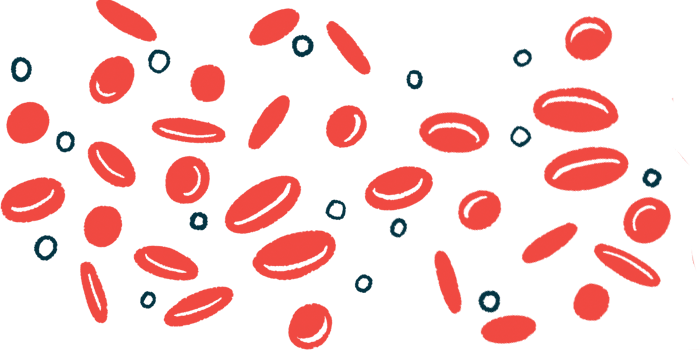
Nearly every person with sickle cell disease (SCD) who underwent a new regimen for stem cell transplant, developed by doctors at Johns Hopkins in the U.S., is alive and has been free of disease activity in the years following the procedure, a study reports.
“The survival rate in the long run in our study was about 95%, so we are curing the overwhelming majority of people who are transplanted, with mismatched donors,” Javier Bolaños-Meade, MD, the study’s senior author at Johns Hopkins University School of Medicine in Baltimore, said in a university news story detailing the findings. The researchers noted that more than 80% of the patients in the small study “had a half-matched donor such as a parent, child or sibling.”
“Essentially, nearly everybody who has … sickle cell disease … can be cured, because nearly everybody has a donor,” Bolaños-Meade said.
The study findings also suggest that most SCD patients undergoing this regimen had normal fertility afterward, and that effectiveness was comparable between children and adults.
Robert Brodsky, MD, another study coauthor at Hopkins, said the new stem cell transplant procedure “is a game-changer because it’s the only curative approach that preserves fertility in most patients, and because the engraftment rate in children was over 90%.” Engraftment refers to the reconstitution of a person’s bone marrow, in which delivered hematopoietic stem cells give rise to new blood cells. Other regimens “had lower engraftment in children compared with adults,” Brodsky noted.
The study, “Bone marrow transplantation for sickle cell disease using posttransplantation cyclophosphamide and 400 cGy TBI,” was published in the journal Blood Advances.

SCD is a genetic disorder that affects blood cells, causing them to take on a sickle-like shape. A stem cell transplant, also known as a bone marrow transplant, is a procedure in which a patient’s hematopoietic stem cells — a type of cell that can generate all types of blood cells — are removed and replaced with cells from a healthy donor. This procedure has the potential to be curative, allowing patients to produce blood cells free from an SCD-causing mutation.
The patient’s existing stem cells are eliminated using a conditioning regimen, which may include chemotherapy agents and radiation, to make room for the new transplanted cells.
Historically, bone marrow transplants for SCD have required a donor who is perfectly HLA-matched, meaning they share identical variations in certain immune system genes with the patient.
A perfect match can substantially reduce the risk of graft-versus-host disease (GVHD), a potentially life-threatening complication where the new immune cells generated from the transplanted stem cells attack the patient’s own healthy tissue.
However, the vast majority of SCD patients don’t have access to a perfectly HLA-matched donor. In more recent years, scientists have been exploring the potential of using haploidentical donors, meaning that the donor and patient are identical for half, instead of all, of the immune genetic markers.
New stem cell transplant procedure requires only a partial donor match
While this dramatically expands the pool of potential donors — because patients can almost always find a haploidentical donor in close relatives such as a parent or sibling — GVHD and engraftment, or graft, failure may be more of a concern.
Scientists at Johns Hopkins had previously tested a regimen for haploidentical bone marrow transplant in which patients received immunosuppressive drugs and low-dose radiation as a conditioning regimen, and additional immunosuppressive medicines after transplant to limit the risk of GVHD. This regimen led to low rates of GVHD and high post-transplant survival rates, but 41% of the patients experienced graft failure.
Now, the researchers described the outcomes of a similar regimen — but one using a higher dose of radiation, with the goal of improving graft survival rates while still minimizing GVHD. A total of 43 SCD patients, ages 5 to 41, underwent that transplant regimen between 2014 and 2025 at Johns Hopkins.
Most received a transplant from a haploidentical donor, and all had two or more SCD-related health complications, such as excess iron levels and chronic pain. Participants were followed for a median of nearly 2.5 years.
The results showed virtually all participants had a successful transplant; there were two cases of graft failure, one involving a child and the other an adult. Rates of success were similar in adults and children, which notably contrasts with other regimens that are less likely to work in young patients.
After 1 year, GVHD was reported in approximately 1 in 10 patients. Most cases of GVHD were not severe, and none were fatal. Also, 10 participants were able to stop immunosuppressive treatments within six months, the data showed.
Two people (5%) died several years after the transplant. One death was from a suspected overdose, and the other had an unclear cause of death, but the patient showed poor red blood cell production.
“Our … regimen has multiple advantages compared with current … regimens,” the researchers wrote.

Researchers say new regimen ‘may preserve fertility’ for patients
For patients receiving a stem cell transplant, the use of powerful immunosuppressive medications and radiation can lead to fertility problems.
Among evaluable female patients, 13 had a return of normal menstrual periods following transplant, while another eight did not, the data showed.
According to the researchers, two of the women became pregnant within five years after the transplant. One of them had experienced a prolonged period of amenorrhea, or lack of menstrual periods, after the procedure.
Among seven evaluable male patients, five had normal sex hormone levels following transplant, while two did not. No pregnancies were reported for the male patients.
Bolaños-Meade noted that “there is a lot of controversy in the transplant world about how much radiation is enough to do a safe transplant but preserve fertility, and nobody knows the answer.”
The researchers noted that further work is needed to track long-term fertility outcomes.
Overall, according to the team, this new stem cell transplant procedure “provides high rates of durable engraftment, and may preserve fertility.”
For patients, “this regimen expands the availability of curative therapy for severe SCD,” the researchers wrote.




Leave a comment
Fill in the required fields to post. Your email address will not be published.